
AI Coding 工作流
本文总结一套面向 xLLM 开发者的实践工作流,用于 NPU 推理优化、回归定位,以及为 PR 准备可复现的验证证据。
完整 workflow 知识库维护在 xllm-workflow。 当你需要可直接加载的 agent skills、Prompt 模板、artifact schemas 或模型优化历史时, 可以使用该仓库。
什么时候使用
Section titled “什么时候使用”当改动需要普通代码 review 之外的证据时,建议使用这套工作流:
- 优化 TTFT、TPOT、TPS、内存使用或 serving 并发能力;
- 公平比较 xLLM 与 vLLM-Ascend、SGLang NPU 或其他 serving 框架;
- 定位乱码输出、数据集掉分、GPU/NPU 不一致、OOM、图 replay 失败、HCCL 问题或运行时 crash;
- 在 NPU 相关 PR 合入前做验证;
- 判断是否需要算子迁移或 kernel-level 实验。
不要把一次 smoke run 当作正式结论。正式的性能和精度结论应包含精确命令、环境、 workload、原始 artifacts 和归一化 summary。
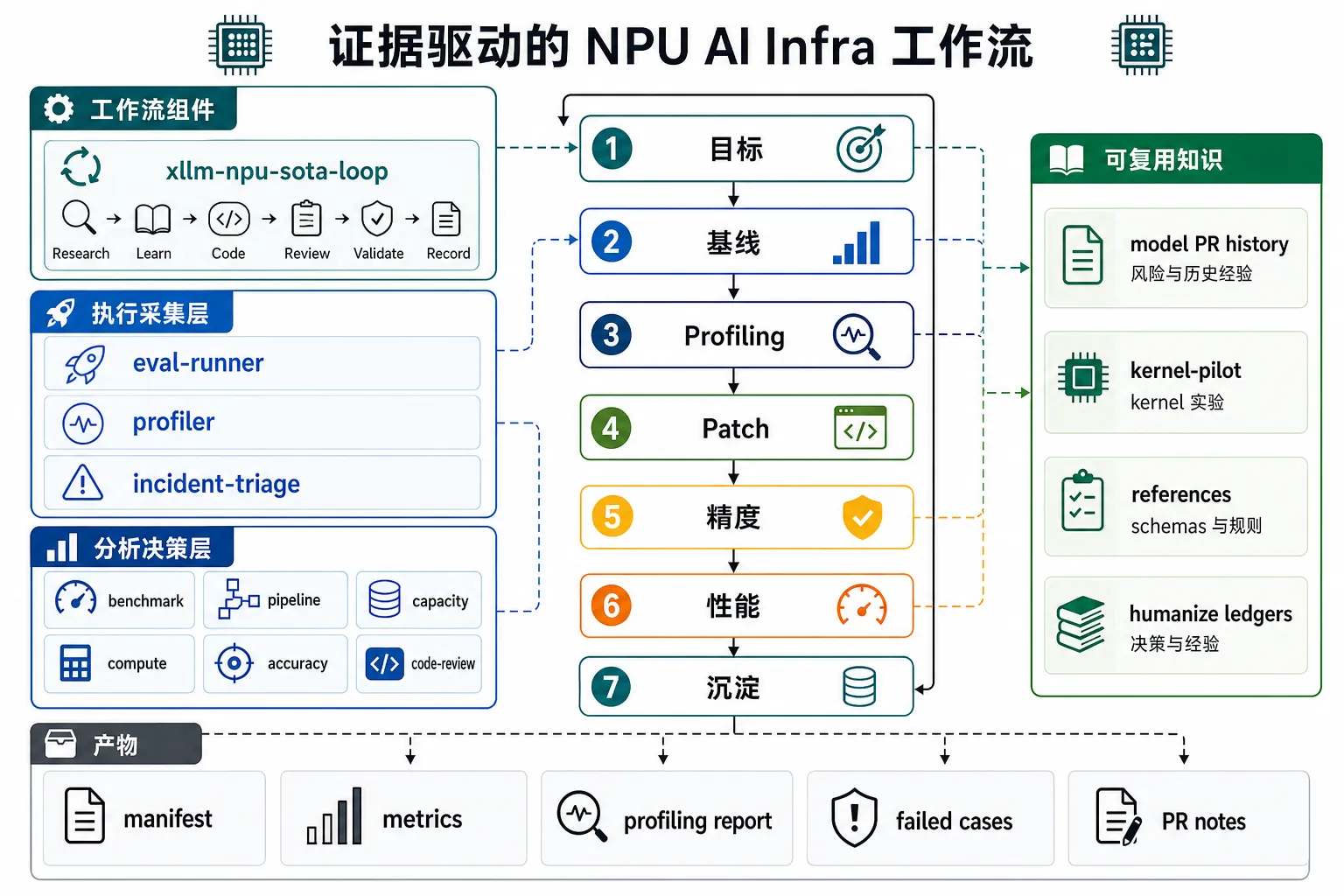
对性能优化和 correctness-sensitive 改动,推荐遵循下面的闭环:
target -> baseline -> profiling -> patch -> accuracy -> performance -> record核心原则是把 benchmark、profiling 和 accuracy 证据分开。Profiling 用于解释瓶颈, 不能替代 warmed-up before/after 性能对比。
完整优化任务可以按下面阶段推进:
| 阶段 | 目的 | 产物 |
|---|---|---|
| 目标与环境 | 定义目标、模型、框架 commit、硬件、CANN/runtime 版本、workload 和 SLA。 | Run manifest |
| 历史知识 | 查询历史模型 PR、失败尝试和已知风险路径。 | History notes |
| 公平基线 | 改代码或参数前先跑 warmed-up baseline。 | 原始 metrics 和 summary |
| 证据采集 | 根据症状采集 profiling、capacity、pipeline、compute 或 accuracy 证据。 | 诊断报告 |
| Patch | 每轮尽量只做一个有意义、可 review 的改动。 | Code diff |
| 验证 | 根据改动重新运行 accuracy、performance、build 和 UT 检查。 | 验证表 |
| 沉淀 | 保存命令、指标、失败尝试、风险说明和后续工作。 | 可复用经验 |
开发者检查清单
Section titled “开发者检查清单”在提交或更新 NPU 优化 PR 前,PR 描述应能回答这些问题:
- 使用了什么模型、tokenizer、dtype、设备型号、设备数量和框架 commit?
- 精确的启动命令和 benchmark 命令是什么?
- baseline 是否经过 warmup,并且运行在干净设备上?
- profiling 结果是否只作为诊断证据使用?
- 跑到了哪个精度验证等级?如果有失败样例,保存在哪里?
- patch 改了什么?还剩哪些风险?
- 其他开发者可以用哪些 artifacts 复现结论?
正式结果建议在同一个 run root 下保存:
- 包含环境和命令细节的
manifest.md或manifest.yaml; - 原始 evalscope 或 benchmark 输出;
- 归一化的
metrics.json或summary.md; - 使用 profiling 诊断时的 profiling report 和 timeline notes;
- 精度任务中的
failed_cases.jsonl或等价坏例记录; - 说明改了什么、为什么安全、如何验证的 PR notes。
workflow 仓库提供了这些共享 schema:
references/run-manifest-template.mdreferences/perf-artifact-schema.mdreferences/profiling-artifact-schema.mdreferences/accuracy-artifact-schema.md
相关 Skills
Section titled “相关 Skills”workflow 仓库包含面向任务的 skills,可由 Codex、Claude Code、opencode 或其他本地 agent runtime 加载:
| 任务 | Skill |
|---|---|
| 端到端优化 | xllm-npu-sota-loop |
| 服务启动和 evalscope 采集 | xllm-npu-eval-runner |
| 公平框架对比 | xllm-npu-benchmark |
| msprof / MindStudio 分析 | xllm-npu-profiler |
| Decode bubble 和 rank skew 分析 | xllm-npu-pipeline-analysis |
| HBM、KV cache 和 OOM 分析 | xllm-npu-capacity-planner |
| FLOPs、MFU 和理论下界估算 | xllm-npu-compute-simulation |
| 精度回归定位 | xllm-npu-accuracy-debug |
| Crash 或运行时事故定位 | xllm-npu-incident-triage |
| NPU 代码 review | xllm-npu-code-review |
| 算子迁移 | xllm-npu-op-migration |
这些 skills 是工程纪律的辅助工具。最终结论仍应基于可复现的 xLLM artifacts 和可 review 的代码改动。